
The Best CGMs of 2026, Compared
Five sensors, four manufacturers, and the question nobody selling one wants to answer
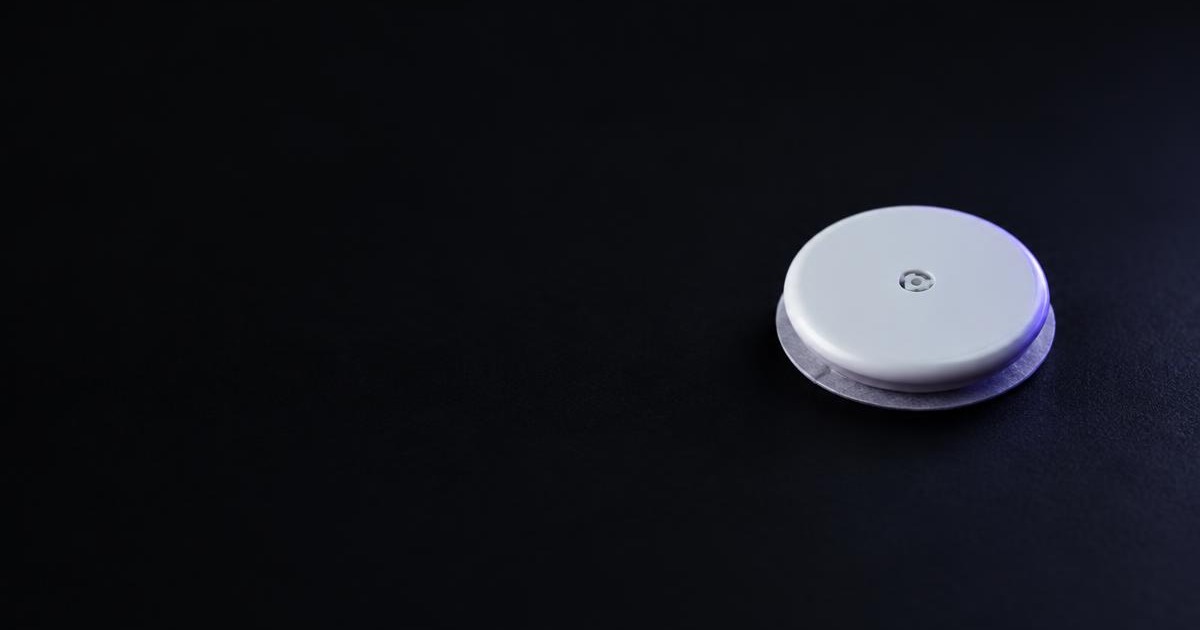
The continuous glucose monitor stopped being a diabetes device somewhere around 2024, when the first one went on sale without a prescription. Two years later there are six mainstream options, three of them aimed squarely at people who have no diagnosis at all. This is a buyer's guide to all of them — and an honest answer to the harder question underneath it.
The 60-Second Answer
For people with diabetes — above all anyone taking insulin — continuous glucose monitoring is one of the best-evidenced tools in modern diabetes care, and which sensor you choose matters far less than having one. The Dexcom G7 15 Day and the FreeStyle Libre 3 Plus are the two strongest prescription options and sit close enough on accuracy that coverage, alert design and pump compatibility should decide between them. For adults without diabetes the honest position is different: no trial has shown that wearing a CGM improves any hard health outcome in a metabolically healthy person, and a normal glucose trace already contains spikes that look alarming on a phone screen and are not. Devices, prices and regulatory status in this guide are accurate as of October 2026 and change quickly.
What a CGM actually measures — and why that matters
A CGM does not measure blood glucose. A filament sitting a few millimetres under the skin measures glucose in interstitial fluid, and an algorithm converts that into the number on the screen, typically every five minutes. Interstitial glucose tracks blood glucose closely at rest, but it lags behind it when glucose is moving fast — after a meal, during exercise, in the minutes after an insulin dose. Every accuracy claim in this guide, and every trend arrow on every app, is built on that one approximation. It is a very good approximation. It is not a blood test.
The 2026 line-up
Prescription (for diagnosed diabetes)
Dexcom G7 15 Day. Up to 15 days of wear plus a 12-hour grace period, 60-minute warm-up, no fingerstick calibration, stated MARD 8.0%, adults 18+. Readings every 5 minutes, waterproof to 8 feet, up to 10 followers through the Dexcom Follow app. The richest alert set of any sensor here: a predictive "Urgent Low Soon" alert that fires when glucose is heading for 3.1 mmol/L (55 mg/dL) within 20 minutes, a Delay First High alert adjustable from 15 minutes to 4 hours, and quiet modes. Integrates with the Omnipod 5, Beta Bionics iLet, Tandem t:slim X2 and Tandem Mobi pumps. Dexcom's own data show 73.9% of sensors last the full 15 days, so roughly one in four does not.[13][17]
FreeStyle Libre 3 Plus. 15 days of wear (the older Libre 3 is 14), 60-minute warm-up, no calibration, stated MARD 8.9% in adults and 9.4% in children, approved from age 2 and in pregnancy. Optional low, high and signal-loss alarms — functional, but a narrower set than the G7's. The smallest sensor on the market.[15]
Medtronic Simplera. 6 days of wear plus a 24-hour grace period, no calibration, stated MARD 10.2% in adults and 10.8% in children; type 1 from age 7, type 2 from 18. Its reason to exist is integration with Medtronic's pump and InPen ecosystem rather than standalone performance.[16]
Over-the-counter (United States only, and none of them for insulin users)
Dexcom Stelo. The first CGM the FDA ever cleared for sale without a prescription. Up to 15 days plus a 12-hour grace period, 30-minute warm-up, stated MARD 8.3%. US$89 per month on subscription, list US$99, HSA/FSA eligible. Adults 18 and over who are not on insulin; Dexcom's own labelling says not to use it if you have problematic hypoglycaemia. It has no customisable alerts or alarms at all — a deliberate design choice that is also a real limitation. Dexcom reports that 77.9% of sensors lasted the full 15 days in its study.[14][17]
Abbott Lingo. Cleared by the FDA alongside Libre Rio on 10 June 2024. 14 days of wear, US$54 for a two-week plan with no commitment and no auto-renewal. Explicitly a wellness product for consumers 18 and over who are not on insulin, and Abbott states plainly that it is not intended to diagnose any disease, including diabetes. Abbott publishes no MARD figure for it.[18][19]
Abbott FreeStyle Libre Rio. The other half of that June 2024 clearance, and the most sensibly targeted product in the OTC tier: an over-the-counter integrated CGM for adults 18 and over who have type 2 diabetes managed through lifestyle rather than insulin. Measurement range 40–400 mg/dL. Abbott does not publish a MARD figure or a list price for it.[19]
A note for Canadian readers. The over-the-counter tier does not exist here. Abbott Canada currently lists only the FreeStyle Libre 3 Plus and the FreeStyle Libre 2; Lingo and Libre Rio are not among them. Dexcom's G7 is sold in Canada through pharmacies with a prescription, with coverage from several private insurers and some provincial plans. If you are in Canada and you want a CGM, you are going through a prescriber — which, for most of the reasons in this article, is not a bad thing.[20]
Specifications and prices accurate as of October 2026
| Device | Rx / OTC | Wear | Warm-up | Stated MARD | Alerts | Indicated for | Price |
|---|---|---|---|---|---|---|---|
| Dexcom G7 15 Day | Rx | 15 d + 12 h grace | 60 min | 8.0% | Full, incl. predictive low | Diabetes, 18+ | Varies; Dexcom says most covered patients pay US$20 or less/month |
| FreeStyle Libre 3 Plus | Rx | 15 d | 60 min | 8.9% (adult) | Low / high / signal loss | Diabetes, 2+, pregnancy | Pharmacy price varies; no published list price |
| Medtronic Simplera | Rx | 6 d + 24 h grace | 60 min | 10.2% (adult) | Yes | T1D 7+, T2D 18+ | Not published |
| Dexcom Stelo | OTC (US) | 15 d + 12 h grace | 30 min | 8.3% | None | Adults 18+, not on insulin | US$89/month subscription (list US$99) |
| Abbott Lingo | OTC (US) | 14 d | Not published | Not published | Wellness app only | Adults 18+, not on insulin | US$54 per 2-week plan |
| Abbott FreeStyle Libre Rio | OTC (US) | Not published | Not published | Not published | Yes | Adults 18+, T2D not on insulin | Not published |
Accuracy: what MARD does and doesn't tell you
MARD — mean absolute relative difference — is the number every manufacturer leads with. It is the average percentage gap between the sensor and a reference blood glucose measurement, so lower is better. Three things are worth knowing before you compare two of them.
First, these are manufacturer figures, generated in company-run studies with their own protocols. They are not independent, and they are not head-to-head.
Second, the independent head-to-head studies that do exist disagree with each other. A 2024 multicentre comparison in 55 adults wearing both sensors found the FreeStyle Libre 3 substantially more accurate than the Dexcom G7 — MARD 8.9% versus 13.6%, with 91.4% versus 78.6% of readings within 20 mg/dL of reference.[7] But a 2025 study from the Universities of Graz and Bayreuth, in which 20 adults with type 1 diabetes wore a Dexcom G7, a FreeStyle Libre 3 and a Medtronic Simplera simultaneously across a physically active weekend, found no significant difference between the G7 and the Libre 3 at all — median absolute relative difference 8.4% versus 7.5%, p = 0.35 — while the Simplera trailed both at 13.8%, p < 0.0001.[8] Note that the 13.6% the first study reported for the G7 is far above Dexcom's own figure for the same platform; the two studies used different reference methods and different metrics, and they cannot simply be averaged. The defensible reading is that the G7 and the Libre 3 are close, that Medtronic's sensor is measurably behind, and that anyone claiming a decisive accuracy winner is overreading the data.
Third — and this is the part that matters most to the wellness buyer — MARD is an average across the whole wear period, and accuracy is worst exactly when the glucose is moving. In a small German pilot study of ten healthy athletes, sensor agreement with laboratory-analysed capillary blood was good at rest while fasting (MARD 8 ± 6%) but deteriorated to 17 ± 12% at rest after a glucose load and 22 ± 24% during moderate-intensity running.[10] The authors concluded that CGM should not be used by healthy athletes without accompanying nutritional or medical guidance. A separate head-to-head study during repetitive scuba diving found neither the Libre 3 nor the G7 reached the accuracy threshold required for non-adjunctive use.[9] The post-meal spike and the training session — the two moments a healthy person buys a CGM to look at — are the two moments the sensor is least sure of itself.
Accuracy: the stated figures, and the independent ones
Lower is better; different studies are not directly comparable
Manufacturer-stated MARD (%)
Independent head-to-head studies (%)
Lower is better. The two independent head-to-head studies used different reference methods and different metrics — Sanfilippo and colleagues report median absolute relative difference across three sensors worn simultaneously (n = 20), Hanson and colleagues report mean absolute relative difference across two (n = 55) — so the bars in the right-hand panel are not directly comparable with each other, and neither panel is comparable with the other. The point of the figure is that the stated figures cluster tightly and the independent ones disagree.
Sources: ADCES danatech and ADA Consumer Guide product specifications (manufacturer figures); Sanfilippo et al., Diabetes Obes Metab 2025; Hanson et al., J Diabetes Sci Technol 2024.
The recall that belongs in a 2026 buying decision
On 4 February 2026 the US Food and Drug Administration classified Abbott's removal of certain FreeStyle Libre 3 and FreeStyle Libre 3 Plus sensors as a Class I recall — its most serious category, reserved for problems with a reasonable probability of serious injury or death. The affected sensors return glucose readings lower than the person's actual blood glucose, which in an insulin user is the dangerous direction to be wrong in. As of 7 January 2026 Abbott had reported 860 serious injuries and seven deaths associated with the problem. The affected models are the FreeStyle Libre 3 sensor (72081-01 and 72080-01) and the FreeStyle Libre 3 Plus sensor (78768-01 and 78769-01), by specific lot; readers, apps, the Libre 2 family and Libre Pro are not affected. Abbott's serial-number checker is at freestylecheck.com, affected sensors should be stopped and disposed of immediately, and replacements are free. The same recall reached Canada.[11]
This is a lot-specific manufacturing problem, not a verdict on the platform, and it would be unfair to read it as one — Abbott's sensor remains among the most accurate on the market. But two things follow from it for anyone buying in 2026. Check your serial numbers. And keep a fingerstick meter in the house: every manufacturer in this guide, without exception, tells you to confirm with blood glucose when a reading does not match how you feel.
What the evidence actually shows in diabetes
This is the part of the CGM story that is not in doubt.
In IMPACT, a 2016 randomised trial of 328 adults with well-controlled type 1 diabetes across 23 European centres, flash glucose monitoring cut time spent below 3.9 mmol/L (70 mg/dL) from 3.38 to 2.03 hours a day, against essentially no change in the fingerstick group — a 38% reduction, p < 0.0001.[2] In the pre-specified subgroup of 161 participants on multiple daily injections, the reduction was 46%, and daily fingersticks fell from a median of 5.4 to 0.1.[3] IMPACT was funded by Abbott Diabetes Care, which is worth saying out loud; the effect size has nonetheless held up across a decade of subsequent practice.
The more contested question has been type 2 diabetes without insulin, and it is now reasonably settled. A 2025 systematic review and meta-analysis by a Canadian group pooled eight randomised trials of 541 people with non-insulin-treated type 2 diabetes and found CGM lowered HbA1c by 0.37 percentage points (95% CI 0.24 to 0.49, I² = 0%), raised time in range by 8.84 percentage points and cut time above range by 8.14, with no significant difference between real-time and intermittently-scanned sensors.[4] An earlier meta-analysis of six trials in 407 people found almost exactly the same thing: HbA1c down 0.31 percentage points, time in range up 8.63, and a large improvement in treatment satisfaction.[5] For context, 0.3 to 0.4 percentage points of HbA1c is roughly what you would expect from adding a modest dose of a second oral agent — achieved here by information alone.
The 2026 ADA Standards of Care reflect this: continuous glucose monitoring is now recommended at diabetes onset and at any point afterwards for people with diabetes who could benefit from it in management, and the prerequisites that used to gate automated insulin delivery have been removed.[12]
What CGM does in people who have diabetes
Randomised evidence in non-insulin type 2 diabetes and insulin-treated type 1 diabetes
Change in HbA1c vs usual care, non-insulin type 2 diabetes (percentage points)
IMPACT trial: hours per day below 3.9 mmol/L (70 mg/dL)
Left: two independent meta-analyses of randomised trials in people with type 2 diabetes who are not taking insulin; error bars are 95% confidence intervals. The third bar is not a null result — it is the absence of one, because no pooled randomised estimate exists for CGM in people without diabetes. Right: the IMPACT trial in 328 adults with well-controlled type 1 diabetes, a 38% reduction in time spent hypoglycaemic over six months.
Sources: Aronson et al., Diabetes Obes Metab 2025; Ferreira et al., Diabetes Technol Ther 2024; Bolinder et al., Lancet 2016 (funded by Abbott Diabetes Care).
Should a healthy person wear one?
Here the evidence thins out dramatically, and the marketing does not.
Start with what a normal glucose trace looks like, because almost nobody buying a wellness CGM has seen one. In a 2019 multicentre study, 153 healthy non-diabetic people aged 7 to 80 wore a blinded Dexcom G6 for up to ten days. Their mean average glucose was 5.4 to 5.5 mmol/L (98 to 99 mg/dL) in every age group except the over-60s, at 5.8 mmol/L (104 mg/dL). They spent a median 96% of the day between 3.9 and 7.8 mmol/L (70 to 140 mg/dL). They spent a median 2.1% of the day — about 30 minutes — above 7.8 mmol/L, and a median 1.1%, about 15 minutes, below 3.9. Mean within-person coefficient of variation was 17%.[1]
Read that again, because it is the single most useful number in this article: a healthy person spends roughly half an hour a day above 7.8 mmol/L, and dips below 3.9 for a quarter of an hour. Those excursions are not prediabetes. They are not "glucose instability". They are what a working pancreas looks like on a graph. A sensor with a MARD near 9% that is least accurate during exactly those excursions will show you a few of them every day, and an app with a red zone will colour them red.
As for whether acting on that data helps, a 2025 systematic review searched five databases for CGM-guided lifestyle interventions in non-diabetic adults and found seven studies in total.[6] The honest summary of them: CGM was genuinely useful for personalising the timing of exercise — starting a walk before the postprandial peak significantly lowered post-meal glucose, insulin and C-peptide — and it worked as a motivational tool, increasing readiness for physical activity. It also identified subclinical dysregulation in specific groups such as women in menopause and people with obstructive sleep apnoea. But the reviewers were explicit that direct evidence of any change in traditional cardiovascular risk factors was limited, and they called for future trials to stop reaffirming the link between glycaemic variability and risk and start testing whether CGM-guided behaviour change actually delivers anything.
That is a fair description of the state of play: promising, mechanistically sensible, commercially enormous, and without a single hard outcome behind it.
There is also a cost that does not appear on the price list. A device that turns every meal into a score, worn by someone already inclined to anxiety about food, is not a neutral instrument. Abbott's own Lingo materials advise anyone with a current or past eating disorder to speak to a healthcare professional first — advice that should be taken literally, and that in my view extends to anyone whose relationship with eating is already effortful.
What a normal CGM trace actually looks like
Median share of the day, %; healthy non-diabetic participants
153 healthy non-diabetic people aged 7 to 80 wearing a blinded sensor for up to ten days. Values are medians, so they do not sum to exactly 100%. Mean average glucose was 5.4–5.5 mmol/L (98–99 mg/dL) in every age group except the over-60s at 5.8 mmol/L (104 mg/dL), and the mean within-person coefficient of variation was 17%.
Source: Shah et al., J Clin Endocrinol Metab 2019;104(10):4356–4364.
So which one should you actually buy?
- Type 1 diabetes, or type 2 on insulin. The Dexcom G7 15 Day or the FreeStyle Libre 3 Plus. They are close on accuracy; choose on the things that differ. Take the G7 if you want predictive low alerts, remote following for a family member, or compatibility with the Omnipod 5, iLet, t:slim X2 or Tandem Mobi. Take the Libre 3 Plus if you want the smallest sensor, coverage for a child from age two, or use in pregnancy. Either way this is a decision to make with your diabetes team, not a shopping decision.
- Type 2 diabetes managed without insulin. The evidence supports CGM here and the guidelines now do too. In the US the Libre Rio is the one product explicitly cleared for this group; in Canada, ask your prescriber about the Libre 3 Plus or the G7 and about whether your plan covers it.
- Prediabetes, or metabolically healthy and curious. If you want to do this, do it as a defined experiment rather than a habit: one two-week sensor, a food diary alongside it, and a specific question you want answered — does this particular breakfast spike me, does a ten-minute walk after dinner change anything. Stelo or Lingo are the sensible purchases. Then take it off. A single wear teaches you most of what a CGM has to teach a healthy person; month twelve teaches you almost nothing month one did not, and costs over a thousand dollars a year.
- Anyone with a history of disordered eating. Don't, or at least not without talking to someone first.
- Everyone. Keep a fingerstick meter, and confirm anything that does not match how you feel.
If you want to understand your metabolic health and you are deciding where to spend first, a fasting insulin and an HbA1c cost a fraction of a year of sensors and tell you more about long-term risk. Understanding your metabolic biomarkers and tracking what you actually eat can help put a short sensor experiment in context.
The short version
- For insulin-treated diabetes, CGM is standard of care and the brand matters less than the access. G7 15 Day and Libre 3 Plus lead.
- Manufacturer MARDs cluster between 8.0% and 10.2%. Independent head-to-heads disagree with each other. Treat small differences as noise.
- Accuracy is worst after meals and during exercise — the two things wellness users buy a CGM to watch.
- Check your FreeStyle Libre 3 / 3 Plus serial numbers against the February 2026 Class I recall at freestylecheck.com.
- In non-insulin type 2 diabetes, CGM lowers HbA1c by about 0.3 to 0.4 percentage points. That is real.
- In people without diabetes, no trial has shown a benefit to any hard outcome. A healthy person is above 7.8 mmol/L about 30 minutes a day, and that is normal.
- If you are buying out of curiosity, buy one sensor, not a subscription.
- Prices and models move fast. Everything here is current as of October 2026.
Frequently asked questions
Which CGM is the most accurate in 2026?
On manufacturer figures the Dexcom G7 15 Day (8.0%) and Dexcom Stelo (8.3%) edge the FreeStyle Libre 3 Plus (8.9%), with Medtronic's Simplera behind at 10.2%. Independent head-to-head studies disagree about which of Dexcom and Abbott is ahead, and both are well clear of Medtronic. The practical answer is that the top two are close enough that accuracy should not be your deciding factor.
Do I need a prescription for a CGM in Canada?
Yes. The over-the-counter category — Stelo, Lingo and Libre Rio — is currently a United States market. In Canada the FreeStyle Libre 3 Plus, FreeStyle Libre 2 and Dexcom G7 are sold through pharmacies with a prescription.
Is it worth wearing a CGM if I don't have diabetes?
As a short, deliberate experiment, possibly. As an ongoing habit, the evidence does not support it: a 2025 systematic review found only seven studies of CGM-guided lifestyle change in non-diabetic adults and no direct evidence of benefit to cardiovascular risk factors.
What counts as a normal glucose spike after a meal?
More than most people expect. Healthy non-diabetic adults spend a median of about 30 minutes a day above 7.8 mmol/L (140 mg/dL) and have a mean within-person glucose variability of 17%. A post-meal rise is physiology, not pathology.
Are FreeStyle Libre sensors safe after the 2026 recall?
The recall covers specific lots of the Libre 3 and Libre 3 Plus sensors, which can read lower than actual blood glucose; the FDA classified it as Class I in February 2026 after Abbott reported 860 serious injuries and seven deaths. Check your serial numbers at freestylecheck.com. Sensors outside the affected lots, and all other Libre products, are not part of this recall.
How much does a CGM cost?
In the US, Stelo is US$89 a month on subscription and Lingo is US$54 for a two-week plan. Prescription sensors are priced through pharmacies and insurance rather than list price; Dexcom says most covered patients pay US$20 or less a month for the G7. Abbott does not publish list prices for the Libre 3 Plus or Libre Rio.
References
- [1]Shah VN, DuBose SN, Li Z, et al. Continuous Glucose Monitoring Profiles in Healthy Nondiabetic Participants: A Multicenter Prospective Study. J Clin Endocrinol Metab. 2019;104(10):4356–4364.
- [2]Bolinder J, Antuna R, Geelhoed-Duijvestijn P, Kröger J, Weitgasser R. Novel glucose-sensing technology and hypoglycaemia in type 1 diabetes: a multicentre, non-masked, randomised controlled trial (IMPACT). Lancet. 2016;388(10057):2254–2263.
- [3]Oskarsson P, Antuna R, Geelhoed-Duijvestijn P, Kröger J, Weitgasser R, Bolinder J. Impact of flash glucose monitoring on hypoglycaemia in adults with type 1 diabetes managed with multiple daily injection therapy: a pre-specified subgroup analysis of the IMPACT randomised controlled trial. Diabetologia. 2018;61(3):539–550.
- [4]Aronson R, Abitbol A, Bajaj HS, et al. Continuous glucose monitoring in noninsulin-treated type 2 diabetes: A critical review of reported trials with an updated systematic review and meta-analysis of randomised controlled trials. Diabetes Obes Metab. 2025;27(11):6220–6242.
- [5]Ferreira ROM, Trevisan T, Pasqualotto E, et al. Continuous Glucose Monitoring Systems in Noninsulin-Treated People with Type 2 Diabetes: A Systematic Review and Meta-Analysis of Randomized Controlled Trials. Diabetes Technol Ther. 2024;26(4):252–262.
- [6]Ahmed N, Elzein Ali MF, Hamed Mohamed MN, et al. Use of Continuous Glucose Monitoring in Non-diabetic Individuals for Cardiovascular Prevention: A Systematic Review of Its Impact on Guiding Lifestyle Interventions. Cureus. 2025;17(10):e94460.
- [7]Hanson K, Kipnes M, Tran H. Comparison of Point Accuracy Between Two Widely Used Continuous Glucose Monitoring Systems. J Diabetes Sci Technol. 2024;18(3):598–607.
- [8]Sanfilippo S, Thurm U, Renfordt M, et al. Performance of three simultaneously used rtCGM systems around a physically active weekend camp in adults with type 1 diabetes: A prospective lab and real-world study. Diabetes Obes Metab. 2025;28(3):1867–1873.
- [9]Gamarra E, Careddu G, Fazi A, et al. Continuous Glucose Monitoring and Recreational Scuba Diving in Type 1 Diabetes: Head-to-Head Comparison Between FreeStyle Libre 3 and Dexcom G7 Performance. Diabetes Technol Ther. 2024;26(11):829–841.
- [10]Bauhaus H, Erdogan P, Braun H, Thevis M. Continuous Glucose Monitoring (CGM) in Sports — A Comparison between a CGM Device and Lab-Based Glucose Analyser under Resting and Exercising Conditions in Athletes. Int J Environ Res Public Health. 2023;20(15):6440.
- [11]U.S. Food and Drug Administration. Glucose Monitor Sensor Recall: Abbott Diabetes Care Removes Certain FreeStyle Libre 3 and FreeStyle Libre 3 Plus Sensors. Class I recall classified 4 February 2026.
- [12]American Diabetes Association Professional Practice Committee. 7. Diabetes Technology: Standards of Care in Diabetes—2026. Diabetes Care. 2026;49(Suppl 1):S150.
- [13]ADCES danatech. Dexcom G7 15 Day — product specifications. Accessed October 2026.
- [14]ADCES danatech. Dexcom Stelo — product specifications. Accessed October 2026.
- [15]American Diabetes Association Consumer Guide. FreeStyle Libre 3 and FreeStyle Libre 3 Plus. Accessed October 2026.
- [16]American Diabetes Association Consumer Guide. Simplera CGM. Accessed October 2026.
- [17]Dexcom. Stelo Glucose Biosensor — product information and pricing. Accessed October 2026.
- [18]Abbott. Lingo — product information and pricing. Accessed October 2026.
- [19]Abbott. Abbott Receives U.S. FDA Clearance for Two New Over-the-Counter Continuous Glucose Monitoring Systems. 10 June 2024.
- [20]Abbott Canada. FreeStyle Libre portfolio — products available in Canada. Accessed October 2026.