
How Much Fish Is Safe in Pregnancy?
Omega-3 Benefit vs Mercury Risk
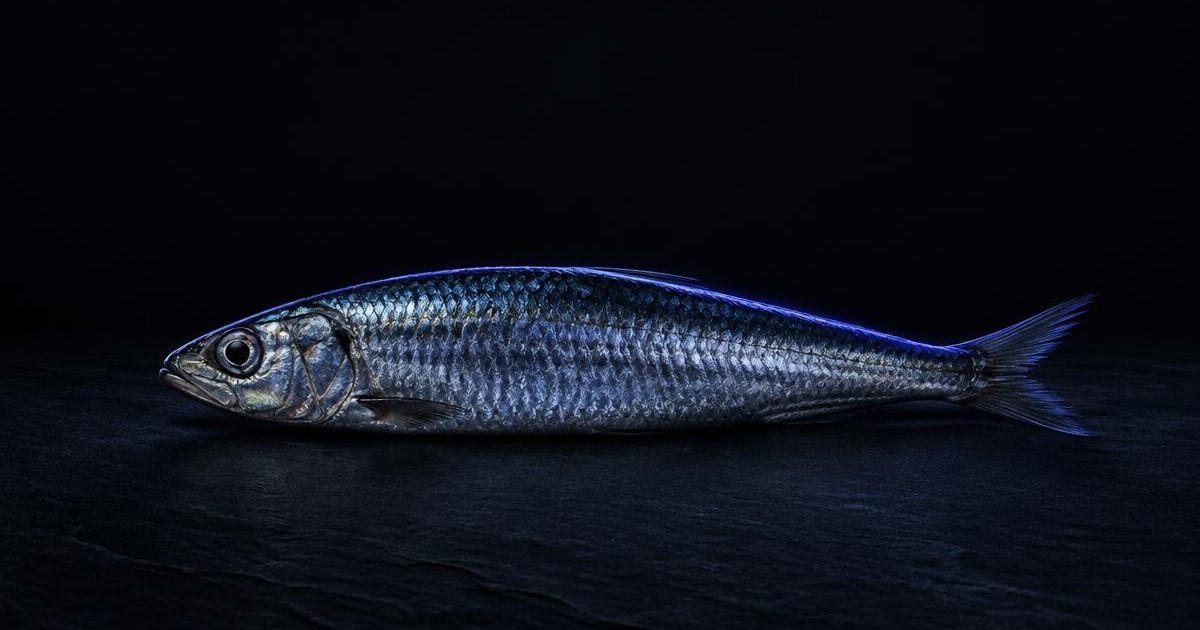
Fish is the richest dietary source of the omega-3 fat a fetal brain is built from. It is also the only meaningful dietary source of methylmercury, a neurotoxin. Almost every pregnant person is told to be careful — and the result, measured in the data, is that most of them eat about half as much fish as they should.
The 60-Second Answer
Eat 8 to 12 ounces — two to three servings — of lower-mercury fish a week. Salmon, sardines, shrimp, trout, canned light tuna, cod, pollock, herring and scallops are all in the FDA's “Best Choices” tier. Hold albacore tuna, halibut and grouper to one serving a week. Avoid shark, swordfish, king mackerel, bigeye tuna, marlin, orange roughy and Gulf of Mexico tilefish entirely. Eating less fish than this is not the safe option: in the largest cohort study ever run on the question, the children of women who ate no seafood in pregnancy were more likely to land in the lowest quartile for verbal IQ, not less.
Two true things at once
Methylmercury is unambiguously a developmental neurotoxin at sufficient dose; fish is unambiguously the best dietary source of DHA, iodine, selenium and high-quality protein during a pregnancy. Precautionary messaging built only on the first half has had a measurable cost.
Per NHANES 2001–2014, childbearing-age women in the US ate a mean of 0.44 ± 0.02 oz-equivalent of seafood per day — roughly three ounces a week — and 100% of the sample fell below the Dietary Guidelines recommendation; mean combined EPA + DHA intake from food and supplements together was 88.1 ± 3.0 mg/day, with over 95% below the 250 mg/day mark. Figures were similar in pregnant women.[1] The FDA's own consumer guidance puts the average at 4.2 ounces a week in pregnancy against a recommendation of 8 to 12.[2]
What the fish is actually for
DHA is a structural fatty acid concentrated in neuronal membranes and the retina, and fetal accretion is fastest in the third trimester. A 2024 multi-society clinical practice guideline concluded that women of childbearing age should get at least 250 mg/day of DHA + EPA from diet or supplements, with an additional 100–200 mg/day of DHA in pregnancy.[3]
That 250 mg/day is 1.75 g a week — which, per NIH Office of Dietary Supplements figures, a single 3-ounce serving of Atlantic salmon exceeds on its own.[4] Our guide to EPA, DHA and DPA explains how these omega-3 fats differ. Fish also supplies iodine — needed for thyroid hormone and fetal neurodevelopment — plus selenium, vitamin D, vitamin B12 and protein. None of those is in a fish-oil capsule.
One serving covers a week.
EPA + DHA in grams per 3-oz cooked serving
Oily fish does nearly all the omega-3 work. A single 3-ounce serving of salmon or herring covers a full week at the 250 mg/day guideline; white fish and shrimp are low-mercury but contribute little DHA.
Source: NIH Office of Dietary Supplements, Omega-3 Fatty Acids fact sheet (values are EPA + DHA per 3 oz cooked).
What mercury actually does — and at what dose
Methylmercury crosses the placenta and the fetal blood–brain barrier, and fetal exposure generally exceeds maternal. The evidence for harm is real. The Faroe Islands cohort included 1,022 consecutive singleton births in 1986–87, with 917 children examined at about age 7. It found mercury-related deficits most pronounced in language, attention and memory, persisting after adjustment and after excluding children whose mothers' hair mercury exceeded 10 µg/g.[5]
The crucial point is that the dominant exposure in the Faroes was pilot whale meat, not fish — a marine-mammal food with far higher mercury and a different contaminant profile, including PCBs, from the fish sold in a North American supermarket.
Then comes the contrast. The Seychelles Child Development Study followed a population eating ocean fish roughly twelve times a week. In Nutrition Cohort 2, with 1,265 mother–child pairs assessed at 20 months, prenatal methylmercury had no direct adverse association with neurodevelopmental outcomes; associations appeared only as interactions with maternal polyunsaturated fat status.[6] At five years in an earlier nutrition cohort of 225 pairs, language scores improved with rising maternal DHA and there were again no adverse methylmercury associations.[7]
The Seychelles evidence deserves an even-handed reading too. A 2022 Main Cohort analysis examined 85 neurodevelopmental outcomes from ages 9 to 24 against time-weighted postnatal mercury and found 14 statistically significant associations, 13 of them adverse — though the authors described the findings as “statistical and of unknown, if any, clinical significance” and called for replication.[8]
Mercury content is enormously species-dependent, spanning roughly 400-fold across the commercial counter. Peak Human's clinical guide to mercury exposure, testing and chelation covers what to do when exposure, rather than prevention, is the question.
A 400-fold range.
Mean mercury in commercial fish and shellfish, ppm (log scale)
Mean mercury runs from 0.003 ppm in scallops to 1.123 ppm in Gulf tilefish — a roughly 400-fold spread. The log scale is what makes the low end readable. Shading marks the FDA's Best / Good / Avoid tiers, which are set by how many servings a week a fish can support, not by mercury alone.
Source: FDA, Mercury Levels in Commercial Fish and Shellfish (1990–2012); tiers from FDA/EPA Advice about Eating Fish (rev. October 2021, updated March 2024).
How the FDA builds its tiers
The FDA's three tiers are built on how many servings a week a fish can safely support, not on a pure mercury ranking — which is why cod at 0.111 ppm sits in “Best Choices” while mahi mahi at 0.178 ppm sits in “Good Choices.”[9]
The cost of eating less
This is the part most readers have never seen. The ALSPAC cohort included 11,875 pregnant women, used a food-frequency questionnaire at 32 weeks, followed children from 6 months to 8 years and adjusted for 28 confounders. It compared women eating none, some (1–340 g/week) and more than 340 g/week of seafood.
Against the >340 g/week reference, eating no seafood carried an odds ratio of 1.48 (95% CI 1.16–1.90) for a child being in the lowest quartile for verbal IQ; “some” was 1.09 (0.92–1.29); trend p = 0.004. The same gradient appeared for prosocial behaviour, fine motor, communication and social development. The authors' conclusion was blunt: advice to limit seafood consumption could itself be detrimental.[10]
Eating no fish was the riskier choice.
Odds ratio for lowest-quartile verbal IQ at age 8, with 95% confidence intervals
In 11,875 ALSPAC pregnancies, children of women who ate no seafood were about 48% more likely to fall in the lowest quartile for verbal IQ at age 8 than children of women eating more than 340 g a week, after adjustment for 28 confounders (trend p = 0.004). This is an observational cohort — it shows association, not proof of cause.
Source: Hibbeln et al., Lancet 2007 (ALSPAC).
More fish, lower-mercury species
Project Viva shows both signals inside one cohort. Among 135 mother–infant pairs, each additional weekly fish serving was associated with a 4.0-point higher visual recognition memory score at 6 months (95% CI 1.3 to 6.7), while each 1 ppm increase in maternal hair mercury was associated with a 7.5-point decrement (95% CI −13.7 to −1.2). The best scores belonged to infants of women who ate more than two servings a week and had hair mercury at or below 1.2 ppm.[11] That is the whole guidance in one result: more fish, lower-mercury species.
A 2023 net-effects analysis covering more than 200,000 mother–child pairs counted 51 beneficial associations between maternal fish consumption and neurodevelopmental outcomes against three adverse ones with no discernible pattern; FDA and FAO/WHO quantitative modelling estimated gains of two to over five full-scale IQ points from achievable levels of maternal fish intake.[12] For balance, several authors of that paper are former FDA staff, and modelled IQ gains are estimates, not measured trial outcomes.
There is also a low-level caveat. A Shanghai cohort of 286 mother–child pairs with a cord-blood mercury geometric mean of 2.00 µg/L found poorer neonatal neurobehavioural scores at three days — but no association with Bayley scores at 18 months, and the neonatal signal was significant only in infants with lower cord DHA.[13]
What the guidance actually says — and how Canada differs
US FDA/EPA advice, revised October 2021 and last updated March 2024, is 8–12 oz/week for those pregnant, breastfeeding or who might become pregnant. A serving is 4 oz, about the palm of a hand: eat 2–3 servings a week from Best Choices or 1 from Good Choices. If eating more than 3 servings a week, take them all from Best Choices. Canned light tuna is a Best Choice; albacore/white tuna is a Good Choice; bigeye tuna is on the avoid list.[9] For locally caught fish, check local advisories; with no advisory, eat one serving that week and no other fish.
Health Canada frames it differently — as monthly caps on high-mercury species rather than a weekly target. For women who are pregnant, may become pregnant or are breastfeeding: no more than 150 g per month of fresh/frozen tuna, shark, swordfish, marlin, orange roughy or escolar, and no more than 300 g per week of canned albacore tuna. 150 g is roughly one cup. The general-population cap is 150 g per week of those same species. Children 5–11: 125 g/month and 150 g/week albacore; ages 1–4: 75 g/month and 75 g/week albacore.[14] Canada sets no explicit minimum seafood target the way the FDA/EPA advice does, which arguably leaves the benefit side of the trade-off less visible to Canadian readers.
Can a capsule do the job?
Omega-3 supplementation in pregnancy has genuinely good evidence for one thing. The 2018 Cochrane review of 70 RCTs in 19,927 women found preterm birth before 37 weeks fell from 13.4% to 11.9% (RR 0.89, 95% CI 0.81–0.97; 26 RCTs, 10,304 participants; high-quality evidence), and early preterm birth before 34 weeks fell from 4.6% to 2.7% (RR 0.58, 95% CI 0.44–0.77; 9 RCTs, 5,204 participants; high-quality evidence). Low birthweight fell from 15.6% to 14% (RR 0.90, 0.82–0.99). Mean gestation was 1.67 days longer (95% CI 0.95–2.39). The same review found prolonged gestation beyond 42 weeks probably rose from 1.6% to 2.6% (RR 1.61, 95% CI 1.11–2.33; moderate quality) — a real trade-off, not a footnote.[15]
What supplements have not shown is the cognitive benefit people buy them for. Cochrane rated child cognition, IQ, vision, language and behaviour outcomes as showing very few differences, on mostly low to very low quality evidence.[15] A 2021 systematic review and meta-analysis of 11 randomised trials of DHA/EPA supplementation in pregnant or breastfeeding women found no significant association with any assessed cognitive parameter, or with birth weight.[16]
So cohort studies of fish consistently show cognitive benefit; randomised trials of fish oil consistently do not. The candid reading is that the cohort signal may be partly confounded by the kind of household that eats fish, that the whole food — iodine, selenium, protein and vitamin D — may matter rather than the isolated fat, or that the trials were too short and too small. The FDA's own position is that supplements “do not provide the protein, omega-6 fatty acids, vitamins, or minerals found in fish.”[2]
A supplement is a reasonable fallback for someone who genuinely will not eat fish. The 2024 guideline suggests roughly 600–1000 mg/day of DHA + EPA, or DHA alone, for women with low intake or low DHA blood levels, beginning in the second trimester — no later than about 20 weeks — and continuing to about 37 weeks.[3] It is not a reason to skip the fish.
The seafood risk that isn't mercury
Pregnancy raises Listeria risk about tenfold. CDC advises avoiding raw or undercooked fish and shellfish — sashimi, sushi and ceviche — and refrigerated smoked seafood such as nova-style, lox, kippered, smoked or jerky unless it is cooked into a dish. Shelf-stable smoked fish in sealed packaging and canned seafood are fine. Cook fish to an internal 145°F (63°C) or until opaque and flaking; cook shellfish until the shells open or the flesh is opaque.[17] For most pregnancies in North America, this is a larger and more immediate risk than the mercury in a salmon fillet.
What to actually eat
- Aim for two to three 4-oz servings a week — that is the target, not a ceiling to creep up to.
- Build the rotation around Best Choices: salmon, sardines, shrimp, trout, canned light tuna, cod, pollock, herring, scallops, anchovies, Atlantic mackerel.
- Cap albacore/white tuna, halibut, grouper, mahi mahi and snapper at one serving a week.
- Skip entirely: shark, swordfish, king mackerel, bigeye tuna, marlin, orange roughy, Gulf of Mexico tilefish.
- Oily fish carries the omega-3 — a 3-oz portion of salmon, herring or sardines covers a week's 250 mg/day target by itself; white fish and shrimp are low-mercury but low-DHA.
- Cook it through, and skip raw fish and refrigerated smoked fish for now — this is about Listeria, not mercury.
- Eating locally caught fish means checking your provincial, state or local advisory; if there isn't one, one serving that week and nothing else.
- If you truly won't eat fish, a DHA-containing supplement is a reasonable second best — discuss the dose with your clinician.
- Already ate a swordfish steak? One high-mercury meal isn't an emergency. Mercury clears over weeks; shift the next few weeks' choices and move on.
Frequently asked questions
How much fish can I eat while pregnant?
8 to 12 ounces a week (two to three 4-oz servings) of lower-mercury species, per FDA/EPA advice. Most pregnant people in the US average about 4.2 ounces.
Is canned tuna safe during pregnancy?
Canned light (skipjack) tuna is a Best Choice at ~0.126 ppm mercury. Canned albacore/white averages 0.350 ppm; FDA puts it in Good Choices, and Health Canada caps it at 300 g a week for pregnancy.
Which fish should I avoid completely?
Shark, swordfish, king mackerel, bigeye tuna, marlin, orange roughy and Gulf of Mexico tilefish. Health Canada adds escolar and fresh/frozen tuna to the limited list.
Is salmon safe during pregnancy?
Yes, and it's close to ideal: ~0.022 ppm mercury with about 1.8 g of EPA + DHA per 3-oz serving.
Can I take fish oil instead of eating fish?
It's a fallback, not an equivalent. Trials show supplementation reduces preterm birth but has not shown cognitive benefit in children, and a capsule has none of the iodine, selenium, protein or vitamin D.
What if I already ate a high-mercury fish?
A single meal is not an emergency. Mercury clears over weeks. Adjust going forward and raise it with your clinician if it was a repeated pattern.
Can I eat sushi while pregnant?
Cooked sushi is fine. Raw fish and refrigerated smoked fish are discouraged because of Listeria, not mercury; pregnancy raises Listeria risk roughly tenfold.
Does Canadian advice differ from US advice?
Yes in shape. Health Canada sets monthly caps on high-mercury species and a weekly cap on canned albacore, but does not set a weekly minimum target the way the FDA/EPA advice does.
References
- [1]Zhang Z, Fulgoni VL, Kris-Etherton PM, Mitmesser SH. Dietary intakes of EPA and DHA omega-3 fatty acids among US childbearing-age and pregnant women: an analysis of NHANES 2001–2014. Nutrients. 2018;10(4):416. doi:10.3390/nu10040416
- [2]US Food and Drug Administration. Questions & Answers from the FDA/EPA Advice about Eating Fish.
- [3]Cetin I, Carlson SE, Burden C, et al. Omega-3 fatty acid supply in pregnancy for risk reduction of preterm and early preterm birth. Am J Obstet Gynecol MFM. 2024;6(2):101251. doi:10.1016/j.ajogmf.2023.101251
- [4]National Institutes of Health, Office of Dietary Supplements. Omega-3 Fatty Acids — Fact Sheet for Health Professionals.
- [5]Grandjean P, Weihe P, White RF, et al. Cognitive deficit in 7-year-old children with prenatal exposure to methylmercury. Neurotoxicol Teratol. 1997;19(6):417–428. doi:10.1016/s0892-0362(97)00097-4
- [6]Strain JJ, Yeates AJ, van Wijngaarden E, et al. Prenatal exposure to methyl mercury from fish consumption and polyunsaturated fatty acids: associations with child development at 20 mo of age in the Republic of Seychelles. Am J Clin Nutr. 2015;101(3):530–537. doi:10.3945/ajcn.114.100503
- [7]Strain JJ, Davidson PW, Thurston SW, et al. Maternal PUFA status but not prenatal methylmercury exposure is associated with children's language functions at age five years in the Seychelles. J Nutr. 2012;142(11):1943–1949. doi:10.3945/jn.112.163493
- [8]Thurston SW, Myers G, Mruzek D, et al. Associations between time-weighted postnatal methylmercury exposure from fish consumption and neurodevelopmental outcomes through 24 years of age in the Seychelles Child Development Study Main Cohort. Neurotoxicology. 2022;91:234–244. doi:10.1016/j.neuro.2022.05.016
- [9]US Food and Drug Administration / US Environmental Protection Agency. Advice about Eating Fish (revised October 2021; last updated March 2024), and FDA, Mercury Levels in Commercial Fish and Shellfish (1990–2012).
- [10]Hibbeln JR, Davis JM, Steer C, et al. Maternal seafood consumption in pregnancy and neurodevelopmental outcomes in childhood (ALSPAC study): an observational cohort study. Lancet. 2007;369(9561):578–585. doi:10.1016/S0140-6736(07)60277-3
- [11]Oken E, Wright RO, Kleinman KP, et al. Maternal fish consumption, hair mercury, and infant cognition in a U.S. cohort. Environ Health Perspect. 2005;113(10):1376–1380. doi:10.1289/ehp.8041
- [12]Spiller P, van Wijngaarden E, Adams HR, et al. Net effects explains the benefits to children from maternal fish consumption despite methylmercury in fish. Neurotoxicology. 2023;99:195–205. doi:10.1016/j.neuro.2023.10.010
- [13]Wang J, Wu W, Li H, et al. Relation of prenatal low-level mercury exposure with early child neurobehavioral development. Environ Int. 2019;126:14–23. doi:10.1016/j.envint.2019.02.012
- [14]Health Canada. Mercury in Fish — Consumption Advice.
- [15]Middleton P, Gomersall JC, Gould JF, Shepherd E, Olsen SF, Makrides M. Omega-3 fatty acid addition during pregnancy. Cochrane Database Syst Rev. 2018;11(11):CD003402. doi:10.1002/14651858.CD003402.pub3
- [16]Lehner A, Staub K, Aldakak L, et al. Impact of omega-3 fatty acid DHA and EPA supplementation in pregnant or breast-feeding women on cognitive performance of children: systematic review and meta-analysis. Nutr Rev. 2021;79(5):585–598. doi:10.1093/nutrit/nuaa060
- [17]Centers for Disease Control and Prevention. Safer Food Choices for Pregnant Women.